Research
Asian Monsoon Dynamics and Predictability
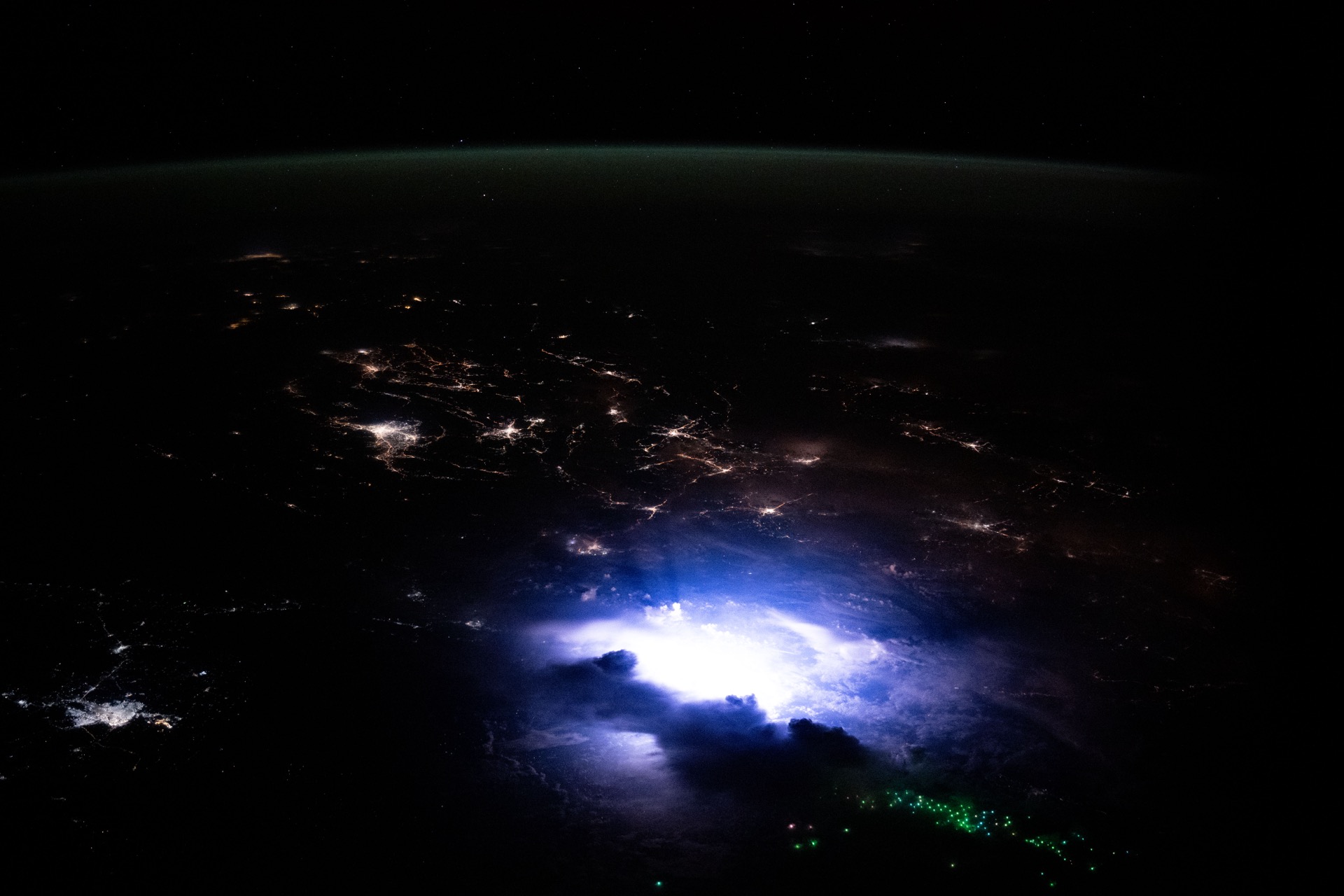
Asian monsoon variability is governed by interactions between tropical convection, oceanic forcing and extratropical circulation. We investigate how these interactions regulate monsoon onset, rainfall and winter circulation across timescales from weeks to decades. Our early work identified how 10–20-day and 30–60-day intraseasonal oscillations act together to weaken the western Pacific subtropical high, establish low-level westerlies and initiate the South China Sea summer monsoon.
We subsequently examined how ENSO and Indian Ocean temperature anomalies alter the timing of monsoon onset, and how the Pacific Decadal Oscillation modulates ENSO-related early-summer rainfall over South China. These studies connect regional monsoon behaviour to the evolving Indo-Pacific background state and demonstrate why relationships used for climate prediction can change across decades.
For the East Asian winter monsoon, our research established links between Ural–Siberian blocking, downstream cold-air advection and the combined influence of the Arctic Oscillation and ENSO. We also documented interdecadal changes in the ENSO–winter monsoon relationship, challenging the assumption of a stationary tropical influence on East Asian climate. Together, these studies reveal a monsoon system shaped by both remote forcing and internal atmospheric dynamics. Our aim is to distinguish their contributions and identify when, where and why they provide useful predictive information.
Selected Publications
- Cheung, H. N., Zhou, W., Mok, H. Y. & Wu, M. C. (2012). Relationship between Ural–Siberian blocking and the East Asian winter monsoon in relation to the Arctic Oscillation and the El Niño–Southern Oscillation. Journal of Climate, 25, 4242–4257.
- Yuan, Y., Zhou, W., Chan, J. C. L. & Li, C. (2008). Impacts of the basin-wide Indian Ocean SSTA on the South China Sea summer monsoon onset. International Journal of Climatology, 28, 1579–1587.
- Zhou, W., Wang, X., Zhou, T. J., Li, C. & Chan, J. C. L. (2007). Interdecadal variability of the relationship between the East Asian winter monsoon and ENSO. Meteorology and Atmospheric Physics, 98, 283–293.
- Zhou, W. & Chan, J. C. L. (2007). ENSO and the South China Sea summer monsoon onset. International Journal of Climatology, 27, 157–167.
- Zhou, W., Li, C. & Chan, J. C. L. (2006). The interdecadal variations of the summer monsoon rainfall over South China. Meteorology and Atmospheric Physics, 93, 165–175.
- Zhou, W. & Chan, J. C. L. (2005). Intraseasonal oscillations and the South China Sea summer monsoon onset. International Journal of Climatology, 25, 1585–1609.
- Chan, J. C. L. & Zhou, W. (2005). PDO, ENSO and the early summer monsoon rainfall over South China. Geophysical Research Letters, 32, L08810.
Extreme Weather and Climate Events
Extreme weather is not simply a local phenomenon. We investigate the circulation patterns and cross-scale interactions that generate heatwaves, floods, droughts, cold extremes and tropical cyclones. Our early studies explained the combined roles of persistent blocking, moisture transport and temperature inversions in southern China’s 2008 freezing disaster, and linked summer heat extremes to jet variability, the western Pacific subtropical high and circumglobal teleconnections.
Building on this foundation, we showed how convective heating over Pakistan excites Rossby waves along the upper-tropospheric westerly jet, favouring downstream heatwaves over East Asia. This pathway connects geographically distant flood and heat extremes through atmospheric dynamics. We also identified the stratospheric quasi-biennial oscillation as a precursor of East Asian summer drought–flood patterns, revealing a source of seasonal predictability beyond conventional oceanic indicators.
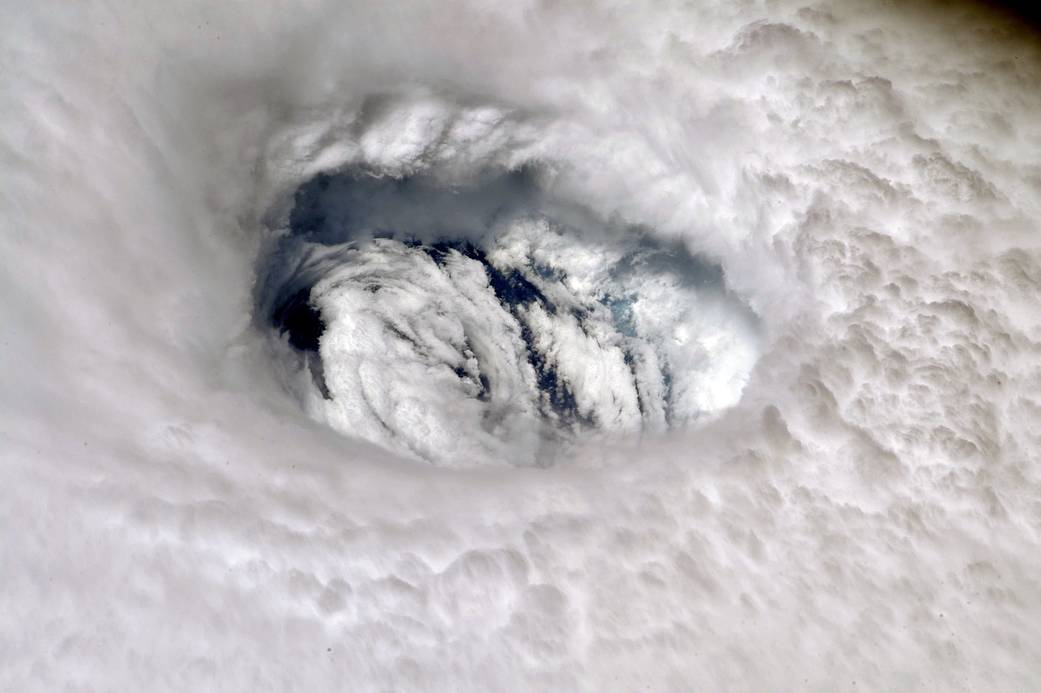
Our tropical cyclone research examines how intraseasonal oscillations modulate genesis and intensity, and how global warming shifts the geographical concentration of cyclone clusters. Combining observations, dynamical experiments and high-resolution simulations, we investigate the mechanisms controlling the occurrence, persistence and spatial organisation of high-impact events. The goal is to move beyond diagnosing individual disasters towards anticipating the circulation conditions that connect and amplify multiple hazards. Key mechanisms and predictors from this research have also informed operational climate forecasting at China’s National Climate Center.
Selected Publications
- Zhou, H., Huang, J., Zhang, Y., Fan, X., Chen, X., Sun, Y. & Zhou, W. (2026). Decoupling between heavy precipitation expansion and population exposure in a warming world. Earth’s Future, 14, e2025EF007771. Highlighted in Nature Climate Change
- Fu, Z.-H., Xi, D., Xie, S.-P., Zhou, W., Lin, N., Zhao, J., Wang, X. & Chan, J. C. L. (2025). Shifting hotspot of tropical cyclone clusters in a warming climate. Nature Climate Change, 15, 850–858.
- Fu, Z.-H., Zhou, W., Xie, S.-P., Zhang, R. & Wang, X. (2024). Dynamic pathway linking Pakistan flooding to East Asian heatwaves. Science Advances, 10, eadk9250.
- Zhang, R., Zhou, W., Tian, W., Zhang, Y., Zhang, J. & Luo, J. (2024). A stratospheric precursor of East Asian summer droughts and floods. Nature Communications, 15, 247.
- Wang, W., Zhou, W., Li, X., Wang, X. & Wang, D. (2016). Synoptic-scale characteristics and atmospheric controls of summer heat waves in China. Climate Dynamics, 46, 2923–2941.
- Wang, W., Zhou, W., Wang, X., Fong, S. K. & Leong, K. C. (2013). Summer high temperature extremes in Southeast China associated with the East Asian jet stream and circumglobal teleconnection. Journal of Geophysical Research: Atmospheres, 118, 8306–8319.
- Li, R. C. Y. & Zhou, W. (2013). Modulation of western North Pacific tropical cyclone activity by the ISO. Part I: Genesis and intensity. Journal of Climate, 26, 2904–2918.
- Zhou, W., Chan, J. C. L., Chen, W., Ling, J., Pinto, J. G. & Shao, Y. (2009). Synoptic-scale controls of persistent low temperature and icy weather over southern China in January 2008. Monthly Weather Review, 137, 3978–3991.
Polar Climate Change and Seamless Prediction
Polar climate change connects sea-ice evolution with ocean conditions and large-scale atmospheric circulation. We investigate these connections from seasonal variability to long-term change, with an emphasis on the physical sources of predictability and uncertainty. Our research combines observations, climate-model simulations and dynamical analysis to understand how atmosphere–ocean–ice interactions shape the rapidly evolving polar environment.
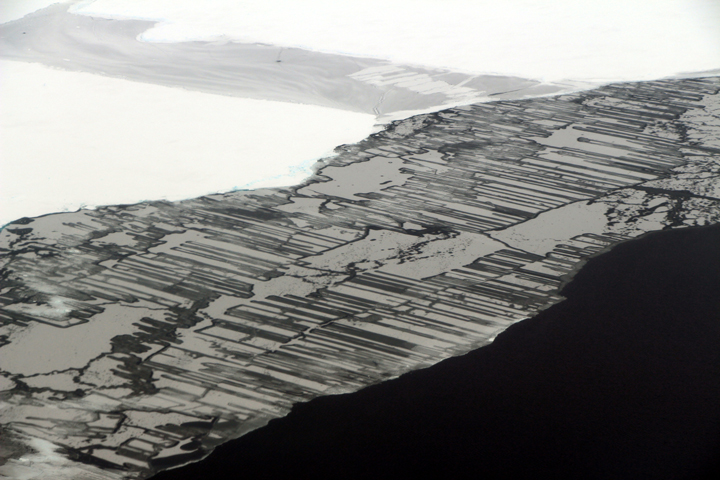
Our recent work uses observational constraints and climate simulations to assess when recurrent ice-free Arctic conditions may emerge. At seasonal timescales, we investigate the dynamic and thermodynamic controls on spring sea-ice melt in the Laptev and East Siberian seas, including atmospheric circulation, heat and moisture transport, polynya activity and surface energy exchange. These studies connect the physical mechanisms of sea-ice retreat with the prospects for anticipating summer ice conditions. The melt-advance framework, in particular, provides a physically grounded potential predictor for seasonal Arctic sea-ice evolution.
Alongside these process studies, we are developing the Polar Cryosphere and Climate Change Education Hub, a polar weather forecasting and visualization platform built around the FuXi 2.1 AI weather model. The platform integrates multi-source meteorological data and station observations, providing forecasts on a native 0.25° grid at six-hour intervals with lead times of up to 10 days. It currently supports China’s five Antarctic research stations through interactive maps, station forecast analysis and AI-assisted weather reports. Our next steps are to fine-tune FuXi 2.1 for polar applications and develop an intelligent forecasting platform for extreme weather and environmental events in both the Arctic and Antarctic.
Selected Publications
- Liang, H. & Zhou, W. (2024). Dynamic and thermodynamic processes related to sea-ice surface melt advance in the Laptev Sea and East Siberian Sea. The Cryosphere, 18, 3559–3569.
- Shen, Z., Zhou, W., Li, J. & Chan, J. C. L. (2023). A frequent ice-free Arctic is likely to occur before the mid-21st century. npj Climate and Atmospheric Science, 6, 103.